



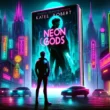



Desire wears a shadow’s face
Imagine a city of rain and neon where sins pool in the gutters and love walks in a borrowed name. In the mid-1940s Pacific Northwest, a woman watches her life narrow to a single dim corridor, until a stranger steps from the dark and says, without words, you are seen. That is the spell of Phantom, a prequel to the Cat & Mouse universe that swaps the viral frenzy of modern dark romance for a smoky, old-world noir.
The story, in a nutshell
Gigi’s marriage has become a cage, fraying finances, addiction, and escalating violence harden the bars. When Ronaldo, a mafia consigliere, turns his attention to her, the gaze itself becomes plot: obsession edged with protection, danger braided with tenderness. Their clandestine orbit unfolds against wartime Seattle’s fogged streetlamps, less car chase, more slow burn, and the book leans into forbidden romance, trauma, and the cost of choosing yourself.
“There isn’t a life where I wouldn’t be your phantom, or a death where I wouldn’t be your reaper.”
That line captures the book’s thesis: devotion as both sanctuary and specter.
Themes and tone
Noir atmosphere: The 1940s backdrop adds cigarette-smoke chiaroscuro, lending the romance a mythic, almost fated cadence
Obsession vs. salvation: Ronaldo’s fixation reads as both threat and refuge, a classic dark-romance tightrope
Survival and agency: Gigi’s choices, complicated by motherhood, fear, and societal constraint, drive the emotional stakes
My review
My reviewThe good
- A fresh angle on the Cat & Mouse world, a self-contained prequel that enriches the mythology without requiring prior reading
- Moody, period storytelling with a strong Seattle noir texture
- Magnetic antihero energy: Ronaldo is written with that morally gray allure many readers come for
- High-intensity intimacy: the book foregrounds the forbidden romance and “spice,” which many readers cite as the page-turning engine
The Bad
- Plot light, romance heavy: several readers note limited “external” action beyond the relationship and spice, pacing can feel languid
- Triggering content: domestic violence and addiction are present on-page, approach with care
- Historical texture varies: the period serves more as atmosphere than deeply researched historical detail
